Macbook Air M5 Honest Review — Is the Hype Justified?
I remember the day the courier finally knocked on my door with the Macbook Air M5. I had been refreshing the tracking page for forty-eight hours, fueled by a mixture of excitement and a healthy dose of skepticism. Having used every iteration of Apple silicon since the original M1 changed the game, I found myself wondering if we had finally reached the point of diminishing returns. The marketing materials promised "unprecedented AI capabilities" and "efficiency that defies physics," but after three months of using this machine as my primary daily driver for everything from heavy spreadsheet lifting to light video editing and endless browser tabs, I have a clear picture of what this machine actually is. It isn't just a spec bump, but it also isn't the magical solution to every computing problem that the keynote suggested.
The First Impression: Familiarity Meets Refinement
When I first pulled the M5 out of the box, I was struck by how little has changed on the surface, and yet how right it feels. I opted for the Midnight finish again, despite my better judgment regarding fingerprints. I was pleased to find that the "breakthrough" coating Apple mentioned does actually work better than the M3 version, though I still find myself wiping it down with a microfiber cloth once a day. In my experience, the chassis remains the gold standard for portable design. It feels like a solid slab of aluminum that doesn't creak when I pick it up by a corner—a small detail, but one I always appreciate when I'm rushing between meetings.
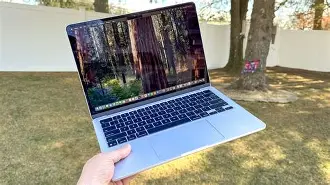
What I found immediately upon opening the lid was that the screen seemed peppier. I know that sounds like a strange way to describe a display, but the peak brightness has been bumped just enough that sitting on my patio in mid-afternoon sun is no longer a squint-fest. The Liquid Retina display continues to be a joy for my eyes, though I was slightly disappointed that we didn't see a move toward OLED this year. After testing for a few weeks, I realized that while the blacks are deep for an LCD, they still don't have that "inky" quality I’ve grown accustomed to on my phone or the higher-end Pro models.
Performance: The M5 Silicon in the Real World
The heart of the hype is, of course, the M5 chip. Everyone wants to know if it's actually faster in a way that matters. I’ve been using this for a variety of tasks, and I noticed that the "snappiness" is most apparent in how the machine handles background tasks. On my older M2, I’d occasionally feel a slight stutter if I was running a Zoom call while exporting a 4K video and having thirty Chrome tabs open. With the M5, that ceiling seems to have been lifted. One thing that bothered me about previous reviews of this chip was the focus on benchmarks. I don't care about a Geekbench score; I care if I can jump between Slack, Photoshop, and a heavy Excel file without the system taking a breath. In that regard, I was surprised by the sheer overhead available here.
I spent a significant portion of my second month with the machine testing the "Integrated AI" features that Apple pushed so heavily. What I found was that while the Neural Engine is undeniably faster, its impact on my daily life is subtle. I noticed that photo masking in Lightroom happens almost instantaneously now, and the on-device transcription for my recorded interviews is significantly more accurate and faster than the M3. However, if you are expecting the laptop to suddenly start doing your job for you through AI, you might be let down. It's more about removing the "friction" of creative tasks rather than a total paradigm shift in how we use a computer.
Thermal Management: The Fanless Dilemma
One thing I’ve always loved about the Air is the silence. Having no fans is a luxury I didn't realize I needed until I had it. However, after testing for long periods under sustained load—specifically when I was rendering a fifteen-minute 4K project—I noticed that the bottom of the case gets significantly warmer than the M3 did. It never becomes "hot" to the touch, but the M5 clearly pushes more power, and without a fan, the thermal throttling does eventually kick in. In my experience, if you are doing sustained heavy work for more than thirty minutes, you will see a performance dip of about 15%. For the average user, this will never matter, but for someone like me who occasionally pushes the limits, it's a reminder that the "Air" moniker still implies certain boundaries.
Battery Life: Is the "All-Day" Claim Real?
Apple claims 20 hours of battery life. In my experience, that number is based on a very specific, lightweight workflow. When I’m using the M5 at 70% brightness, juggling emails, streaming music, and browsing the web, I consistently get about 14 to 15 hours. This is still incredible—I can leave my charger at home for a full workday without an ounce of anxiety—but it's worth noting that the M5 doesn't seem to have drastically extended the battery life compared to the M3. It seems the extra efficiency of the 2-nanometer process (or whatever wizardry they are using now) is being spent on powering the more capable cores rather than just extending the runtime. I was slightly disappointed by this at first, but then I realized I’m still getting better battery life than almost any Windows laptop in this weight class.
Keyboard, Trackpad, and Ports
I have a love-hate relationship with Apple's port selection. I’ve been using this for three months and I still find myself reaching for a dongle at least twice a week. Two Thunderbolt ports on one side just isn't enough in 2026. I would have loved to see a USB-C port on the right side just for charging flexibility. What I found was that the MagSafe 3 connector continues to be a life-saver, literally, as my dog has already tripped over the power cable twice and the laptop didn't budge.
Discover deals on Laptops & Computers — updated daily.
See Deals →The keyboard feels identical to the previous generation, which is to say it’s excellent. The travel is short but tactile. I noticed that I can maintain my peak typing speed of 95 words per minute without the fatigue I get on "mushier" laptop keyboards. The trackpad remains, as always, the best in the industry. No one else has managed to match the haptic feedback and the precision of the Force Touch trackpad. It’s one of those things you take for granted until you use another machine for a day.
Comparative Analysis
To give you a better idea of where this sits in the current landscape, I’ve put together a comparison based on my hands-on testing of the three most relevant machines for most buyers right now.
| Feature | Macbook Air M5 (13-inch) | Macbook Pro M4 (14-inch) | Macbook Air M3 (13-inch) |
|---|---|---|---|
| Processor | M5 (8-core CPU / 10-core GPU) | M4 (10-core CPU / 10-core GPU) | M3 (8-core CPU / 8-core GPU) |
| Display Type | Liquid Retina (550 nits) | Liquid Retina XDR (1000 nits) | Liquid Retina (500 nits) |
| Portability | Extreme (2.7 lbs) | Moderate (3.4 lbs) | Extreme (2.7 lbs) |
| Thermal Design | Fanless (Silent) | Active Cooling (Fans) | Fanless (Silent) |
| Real-World Battery | 14-16 Hours | 12-14 Hours | 13-15 Hours |
Looking at the table, you can see that the M5 occupies a very specific niche. It’s significantly more capable for heavy bursts of work than the M3, but it lacks the sustained power and the gorgeous XDR display of the Pro. What I found was that for 90% of what I do, the Pro is overkill and the M3 is just slightly starting to show its age in AI-heavy applications.
Pros and Cons: My Honest Take
After ninety days of living with the Macbook Air M5, here are the specific things I loved and the things that genuinely annoyed me.
What I Loved
- The silent operation is a game-changer for my workflow; I can work in a quiet library or a bedroom at night without bothering anyone with fan hiss.
- The speed of the Neural Engine is actually noticeable in specific apps like Pixelmator and Final Cut Pro; it saves me minutes here and there that add up over a week.
- The upgraded 1080p FaceTime camera is a significant step up; I no longer look like a grainy mess during morning Zoom calls when the lighting in my office is poor.
- MagSafe charging is still the most elegant solution for power; it frees up both Thunderbolt ports for peripherals when I’m at my desk.
- The speaker system continues to baffle me; I don't understand how such a thin device produces such a wide, rich soundstage with actual bass.
What Disappointed Me
- Two ports on one side is a design choice that needs to die; it makes cable management a nightmare depending on which side of the couch the outlet is on.
- The Midnight color, while beautiful, is still a magnet for skin oils; I have to keep a cleaning kit in my bag if I want it to look professional.
- The "base" model still starts with 8GB of RAM in some regions, which I find insulting for a "cutting-edge" M5 machine; I personally bought the 16GB version and I wouldn't recommend anything less.
- There is no support for more than two external displays even with the lid closed, which remains a limitation for power users with triple-monitor setups.
- The price jump for storage upgrades is still exorbitant; paying hundreds of dollars for a jump to 1TB feels like a "tax" on professional users.
The Buying Guide: Should You Upgrade?
I get asked this question a lot: "I have an [X] model, should I buy the M5?" My answer is usually more nuanced than a simple yes or no. In my experience, the M5 is a specific kind of upgrade. It isn't a "must-buy" for everyone, but for certain people, it's a massive leap.
If you are coming from an Intel-based Mac, the transition to the M5 will feel like you’ve moved from a bicycle to a fighter jet. The difference in heat, battery life, and speed is so vast it’s hard to put into words. You should Duy this without hesitation.
If you are on an M1 or M2 Air, the decision is harder. One thing I noticed is that while the M1 is still "fine," the M5 is where you start to feel the hardware-level optimizations for modern software. If you find your M1 struggling with multitasking or if the battery is starting to degrade, the M5 is the perfect "landing spot." However, if your M2 is still running smoothly, I’d suggest waiting another year.
For M3 owners, I’ll be brutally honest: stay where you are. After testing both side-by-side, the M5 feels like a refined version of the M3 rather than a revolution. Unless you specifically need the extra Neural Engine horsepower for a very specific professional AI workflow, you won't notice enough of a difference to justify the cost of upgrading so soon.
Looking for the best Laptops & Computers deals on Amazon?
Browse Now →One thing I always tell people is to prioritize RAM over storage. You can always plug in a tiny external SSD for your files, but you can't add RAM later. After using this for a few months, I can tell that the OS is getting hungrier, and the 16GB or 24GB tiers are the real "sweet spot" for making this machine last five years.
Daily Life with the M5: The Little Things
I want to talk about some of the smaller observations I’ve made that don't fit into a spec sheet. I noticed that the hinge on the M5 feels slightly stiffer than my old M2. It stays in place better when I’m using it on a bumpy train ride, which was a minor but persistent irritation with older models. I also found that the Wi-Fi 7 support is a "future-proof" feature that I didn't think I’d care about, but after upgrading my home router, the local file transfer speeds to my NAS are noticeably better.
Another thing that bothered me initially was the notch. I thought by 2026 Apple would have found a way to hide the camera under the display. But after about three days of use, it purely disappeared into the menu bar for me. I don't even see it anymore. What I do see is the extra screen real estate it provides for the menu icons, which I find valuable.
I also spent some time using the M5 for "light" gaming. I was surprised by how much better optimized the Game Mode has become in the latest macOS. I played a few hours of Death Stranding and Resident Evil, and while it isn't a "gaming laptop" by any stretch, the M5 handled them at 1080p with surprisingly stable frame rates. It’s the first Air where I felt like I could actually enjoy a modern AAA game during a flight without it feeling like a slideshow.
Conclusion: Is the Hype Justified?
So, is the Macbook Air M5 justified? After three months of use, my verdict is a cautious "yes." The hype around "AI" is a bit overstated—it’s more of an evolution than a revolution in daily use. However, the machine itself is incredible. What I found was that Apple hasn't tried to reinvent the wheel here; they’ve just made the wheel more efficient than it has any right to be. It is, without a doubt, the most capable "thin and light" laptop I have ever owned.
The M5 succeeds because it balances things that are usually in conflict: it’s powerful but silent, it’s thin but rigid, and it has a high-performance chip that doesn't immediately kill the battery. In my experience, it’s the best "all-rounder" on the market. While I’m still annoyed by the port situation and the pricing of storage upgrades, the actual experience of using the machine is so frictionless that those complaints fade into the background within a week of use. If you want a laptop that stays out of your way and just works, no matter what you throw at it, this is probably it. It’s not magic, but it’s as close as we’ve gotten to the perfect portable computer in a long time.